
Stroke Awareness Month highlights readiness, rapid care at Gothenburg Health
May is Stroke Awareness Month, a time to learn how to recognize stroke symptoms quickly and understand why immediate medical care can dramatically affect outcomes. At Gothenburg Health, teams are preparing every day to respond swiftly when stroke patients arrive in the emergency room.
Gothenburg Health is currently updating its stroke protocol to ensure patients receive timely, evidence-based care, according to Chief Medical Officer Dr. Anna Dalrymple.
“When it comes to stroke, every minute matters,” Dalrymple said. “We are passionate about being fully prepared to offer the highest standard of care in our emergency room so we can give stroke patients the best possible outcomes.”
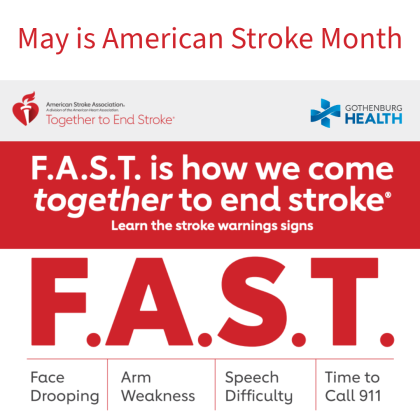
Recognizing stroke symptoms early is a critical first step. The American Stroke Association promotes the “BE FAST” method to help people identify warning signs and take action:
Stroke is a medical emergency, and calling 911 right away can allow patients to receive life-saving care faster.
Once a patient arrives at Gothenburg Health, advanced imaging plays a vital role. The hospital uses a state-of-the-art CT scanner, which allows clinicians to rapidly scan the brain and determine whether other interventions may be appropriate. Access to this technology allows many patients to receive critical imaging locally.
As a designated critical access hospital, Gothenburg Health plays a key role in rural health care by providing essential services when patients need them most.
“Our role is to be ready at any moment to evaluate, stabilize and begin treatment,” said hospitalist Jordan Sieh. “We provide quality care right away and work closely with our partner hospitals to smoothly transfer patients who need a higher level of specialty care.”
Strong partnerships with regional hospitals are important to Gothenburg Health to help ensure continuity of care for stroke patients across rural Nebraska.
Stroke Awareness Month serves as an important reminder: knowing the signs, acting FAST and having access to prepared medical teams can save lives.